

The Delhi-NCR property market in 2026 is a confusing scene: prices are still rising, but buyers are leaving. On paper, things are looking “strong.” In reality, they feel off. For a homebuyer and an investor, not to say a real estate professional, the question is: Are higher prices masking warning signs in the Delhi-NCR market?
Let’s take a clear, honest look at it, without hype.
A Market That Looks Strong but Feels Weak
The Delhi-NCR real estate market appears healthy at first sight: prices in Gurgaon, Noida, Greater Noida, and parts of Delhi keep increasing. Builders sound optimistic. News stories speak of “resilience” and “long-term growth.”
But the sales numbers tell a different story. People are visiting sites less often. There’s more slow-moving inventory. Many buyers are putting off decisions; they’re not cancelling, just hesitating. That hesitation itself is a warning sign.
The spread between rising prices and fewer buyers is the key warning sign for 2026.
Why Are Home Prices Still Rising in Delhi-NCR?
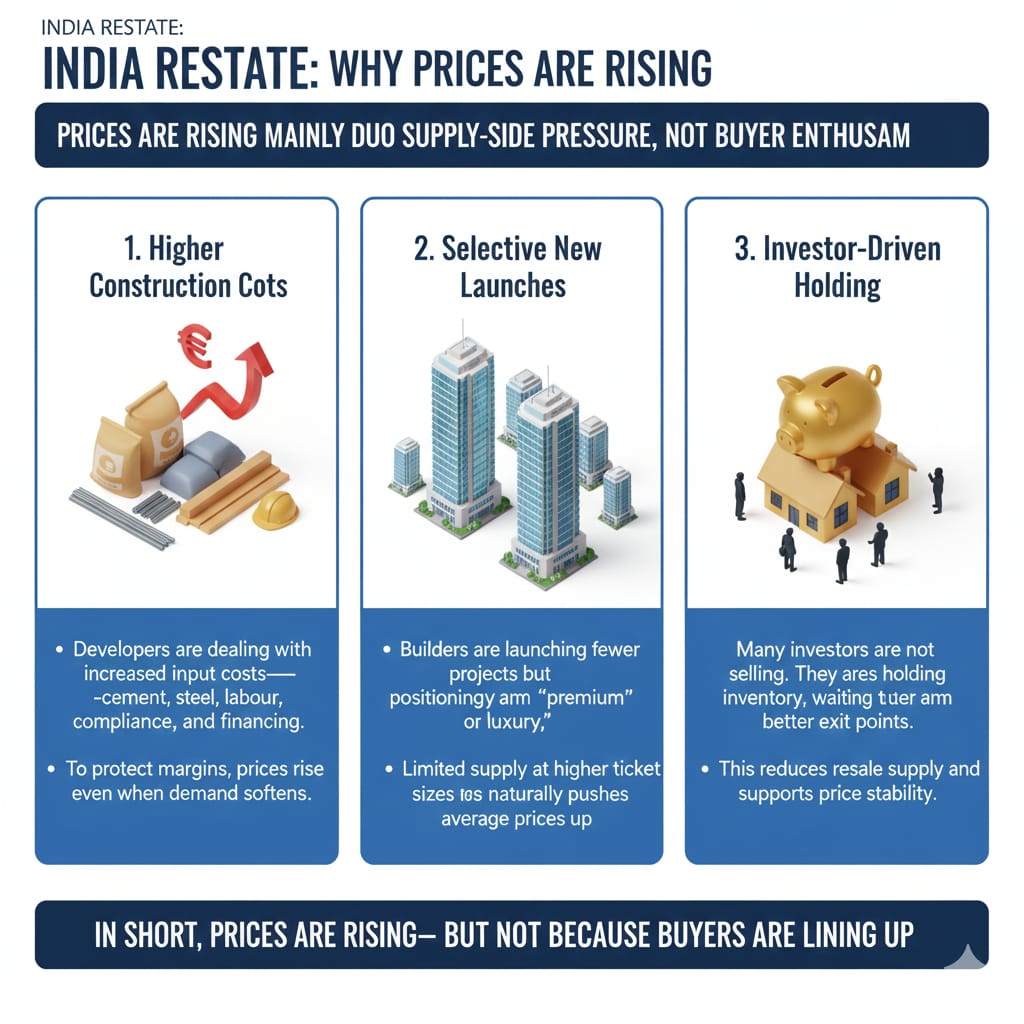
There is a misunderstanding about how supply and demand affect the price of real estate. The reason prices have been increasing is due to supply chain issues rather than buyer demand.
1) Rising Construction Costs.
Higher expenses are being incurred by developers (increased costs of cement, steel, labor, compliance, and financing). Therefore, even during a downturn in demand, developers continue to raise prices to maintain profitability.
2) Limited Launches of New Developments.
While builders continue to launch new developments, the number of launches has decreased, whereas now many builders are marketing their developments as “luxury” or “premium.” Because there is a limited supply of new luxury and premium real estate for sale, this will cause average selling prices to increase.
3) Investors Are Holding Inventory.
Some investors have elected not to sell; hence, they keep their inventory until the time is right. As a result, less inventory is available for resale, helping to stabilize the market and maintain consistent pricing levels.
In summary, the increases in selling prices do not result from increased buyer demand but are instead caused by a lack of supply.
Why Are Property Sales Declining Despite Rising Prices?
The main message of the text is
Affordability is under increasing pressure because of:
- Property prices have risen faster than wages and income.
- Monthly payments have become heavier, and down payment amounts are larger.
- Consumers have less financial comfort than they did previously.
Basically, buyers are still considering real estate; however, their timing for purchases has been pushed back.
Interest Rates Still Matter:
Interest rates on home loans are still an important factor in long-term affordability, as even small changes in interest rates will change how affordable a home will be. In particular, first-time buyers need to be more aware of every decimal point in interest rates than what the developers believe. The psychology of buyers has changed and is now more risk-averse than it was pre-COVID-19. Newer buyers compare, negotiate, postpone, and consider their options more than ever before. Emotional purchasing is being replaced by logical purchasing, which is good but causing a slowdown in sales.
Delhi-NCR Is Not One Market—It’s Many Micro-Markets
Delhi-NCR needs to be perceived as micro-markets rather than a single market.
A common mistake is taking Delhi-NCR as one uniform property market. It is not.
Gurgaon
Premium developments are selling at a slow but steady pace. Buyers in the mid-segment face pricing challenges.
NOIDA & GREATER NOIDA
The infrastructure outlook remains strong, yet a very price-sensitive market exists. Buyers are looking for real value, not marketing rhetoric. Delhi’s limited supply maintains high prices, though volumes of transactions are relatively small. The market is dominated by end-users, with investors being more cautious. A precise understanding of these micro-markets is vital in 2026.
Is This a Property Bubble Forming?
Be truthful:
It is not a “bubble” the way in which we typically define it.
Typically, a “bubble” is characterized by unrestrained lending, speculation, and excessive debt; however, the indicators for this sort of behavior in the Delhi NCR in 2026 are not particularly strong.
However, an imbalance between prices and demand does exist.
Buyer confidence is still lagging behind the pricing levels currently set in the market. This does not necessarily lead to a crash, but it does have the potential to create a prolonged stagnation period.
Stagnation can be as painful as declining markets.
What Buyers Are Really Thinking in 2026
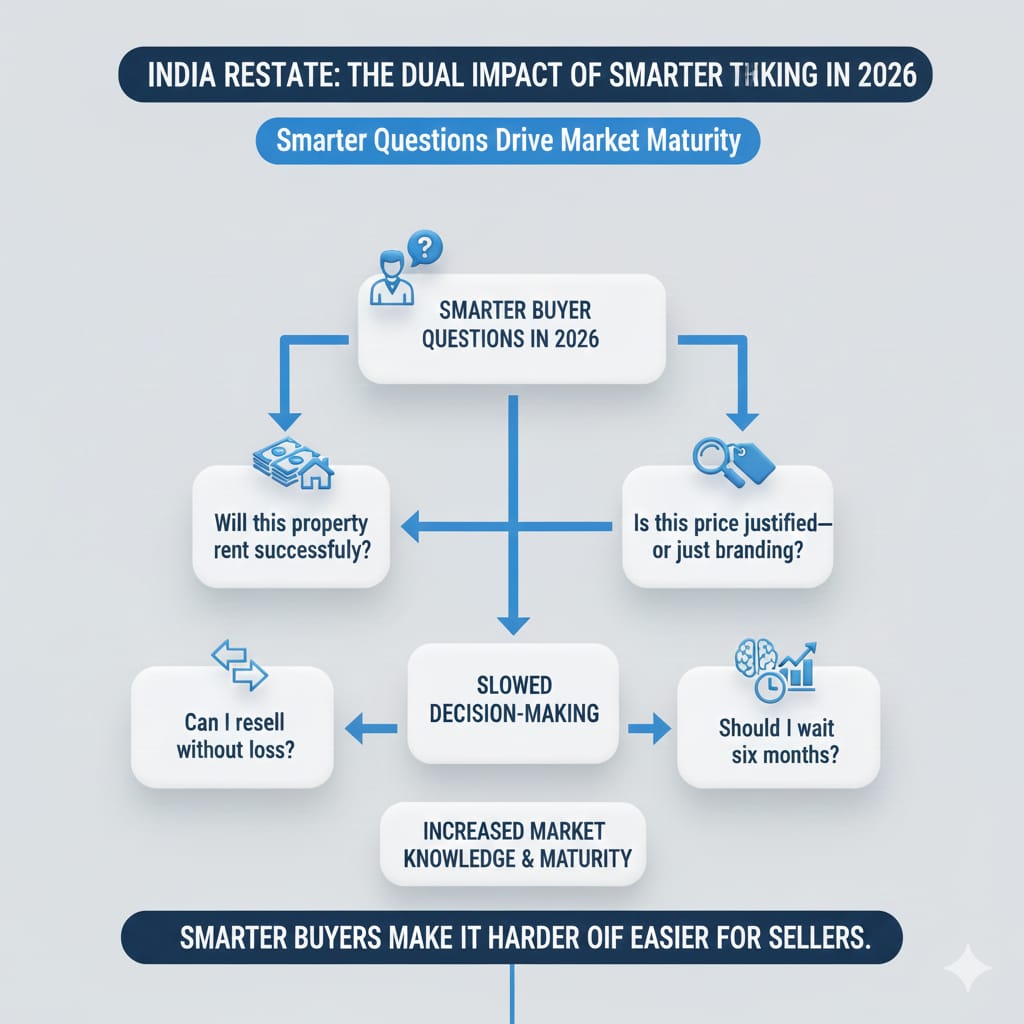
Today’s buyers are asking more analytical questions such as
“Will I have success renting this property if I purchase it?”
“Will I be able to sell this property and not incur any losses?”
“Is this price valid, or only a function of branding?”
“Should I wait six months before purchasing the home?”
Asking these types of questions can significantly slow down the purchasing decisions of buyers; however, they increase the number of knowledgeable consumers operating in today’s marketplace.
As such, while intelligent buyers can make it increasingly difficult for sellers to succeed in their businesses, they also make it easier for sellers to have success.
How Developers Are Responding (Quietly)
Developers are still releasing consistent price lists; however, their strategy is changing behind the scenes.
- Flexible Payment Plans
- Possession-Linked Schemes
- Added Amenities Over Discounts
- Negotiation Space Not Publicly Listed
- While prices rise publicly, deals happen privately.
- This Key 2026 Insight isn’t necessarily surprising.
What This Means for Homebuyers
Homeownership as a Living Space:
- Negotiating Authority
- Utility, Not Energy, Should Be The Primary Thing to Think About When Purchasing A Home
- Take Your Time—If There’s No Urgency To Buy, Then You Can Explore All Options.
Real Estate Investment Properties:
- Not Much In The Way Of Cash Flow
- Limited Appreciation In Value Within The Next 2 Years
- Must Hold Properties For A Longer Time.
Patience is your biggest asset in 2026.
What This Means For An Investor
Currently, the risk of speculative flipping is high.
Although investors interested in infrastructure-oriented micromarkets with demand driven by actual users, rather than speculative buying, can probably still find opportunities in these markets.
Investment from seasoned investors today is cautious; however, it is still part of their overall investment strategy.
Why Sales Slowed Prior To Price Corrections (or Stabilisation)
Real estate markets do not respond immediately to external factors.
Sales drop first.
Next, there will be a decline in market sentiment.
Thirdly, price reactions are the last to react.
The lag in price reaction is typical. However, it doesn’t guarantee a price correction. It does signal a change in the market cycle.
Industry reports from several companies (i.e., Knight Frank, ANAROCK, and CBRE) show that this timing has emerged as standard throughout the Indian metro regions (including Delhi-NCR).
The main point here is that volume of sales results in volume of sales. Headlines generally do not determine whether there will be a continued volume of sales.
Will Prices Fall in Delhi-NCR in 2026?
A sharp decline in price is unlikely unless there is a catastrophic economic event. It will likely be more likely that:
Prices will be stable
Corrections are likely to occur in the overinflated segments
Increased deals through negotiation
Slower price gains
These are good signs for buyers.
Final Verdict: Warning Sign or Market Maturity?
The real estate industry in Delhi-NCR will remain stable; however, growth projections presented by other publications indicate a more pessimistic outlook on success.
The current period represents a transition from the boom-and-bust cycles generally associated with real estate to a time of calmer, better-calibrated activity. The continued increase in price without commensurate increases in sales is a sign from the marketplace that both buyers and sellers should take a moment to “slow down,” “think,” and “act!” My guidance to intelligent and profitable buyers and investment professionals during this “concern” period is clear but cautionary.
Market Insights Report—Residential Property by Knight Frank India
India Housing Report – ANAROCK Research
Real Estate Market Outlook—CBRE India
Reserve Bank of India – Housing & Credit Environment
(Sources documented for use as supporting evidence for price and economic path analysis)
Related Articles
Mumbai-Style Luxury City Planned in NCR, Big Boost Expected for Property Prices
Affordable 2BHK Homes Near RRTS in NCR: Why Demand Is Rising in 2026
RERA Rules 2026: What Changes Are Coming & How They Will Affect Home Buyers

Harsh Katyan is a real estate content writer and researcher at Insta India Property. He specialises in covering Gurgaon and the Indian real estate market trends, property investment opportunities, and housing news.
He regularly publishes detailed property guides, market analyses, and investment insights to help buyers and investors make informed decisions.


Join The Discussion