
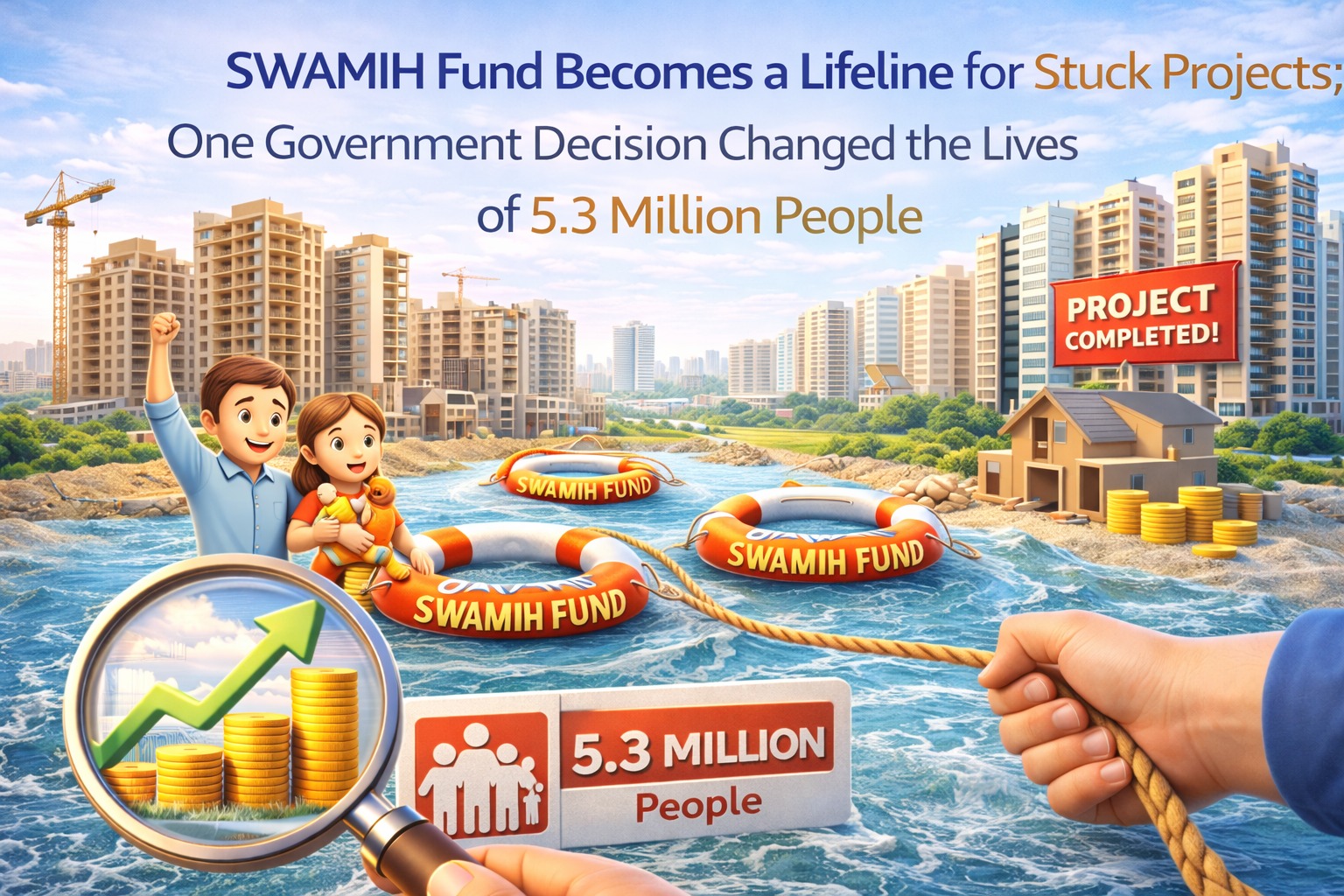
India’s property sector has been very mixed. However, one scheme has really made a big impact on lots of people’s lives in India: the SWAMIH Investment Fund, which provided homebuyers a way out of their home loan payments when they were in the middle of being stuck indefinitely with broken promises. What started as one small decision by the government became a lifesaver for 5.3 million buyers.
It’s not about a quick miracle; it’s about good government policy, persistence, and practicality—the same things that the property sector needed to move forward in the right direction.
Let’s look at just what happened, why it matters, and what this means for the future of the Indian property market.
What Is the SWAMIH Fund? (In Simple Words)
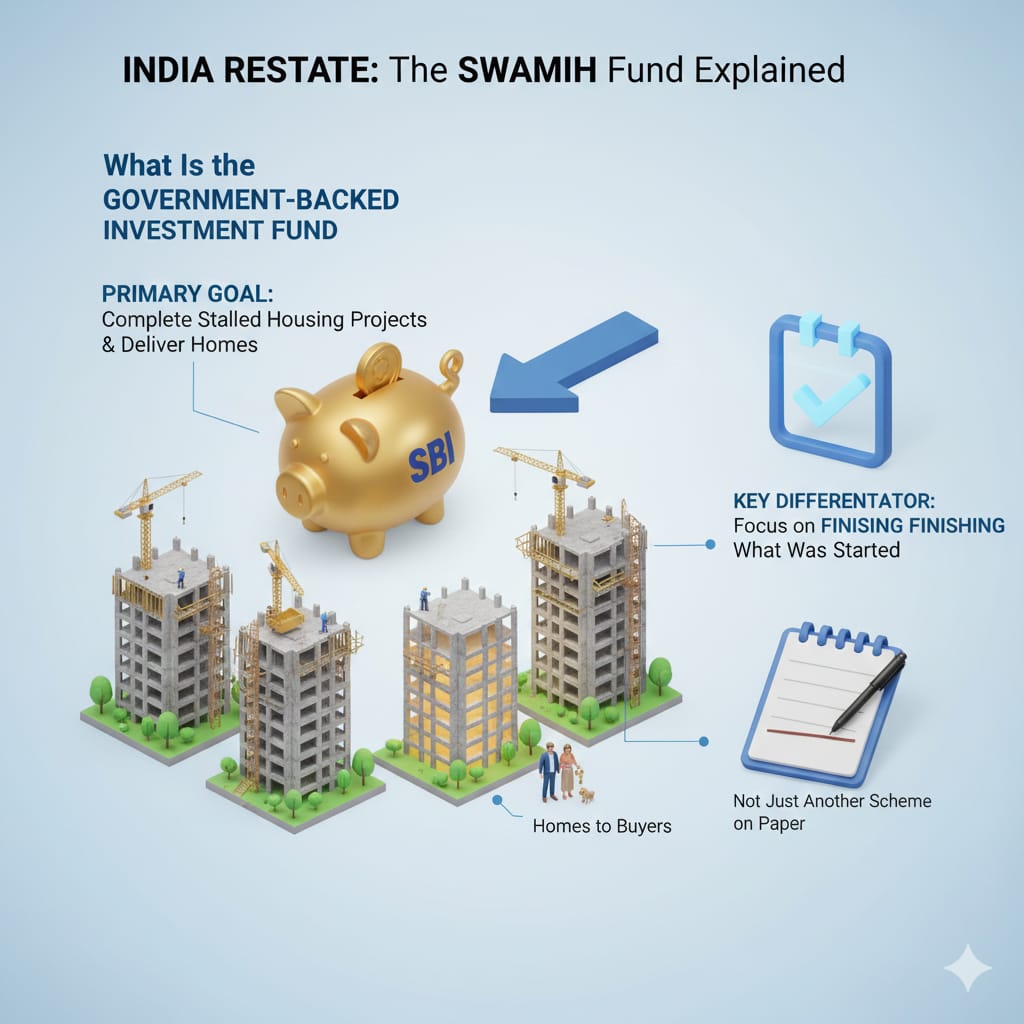
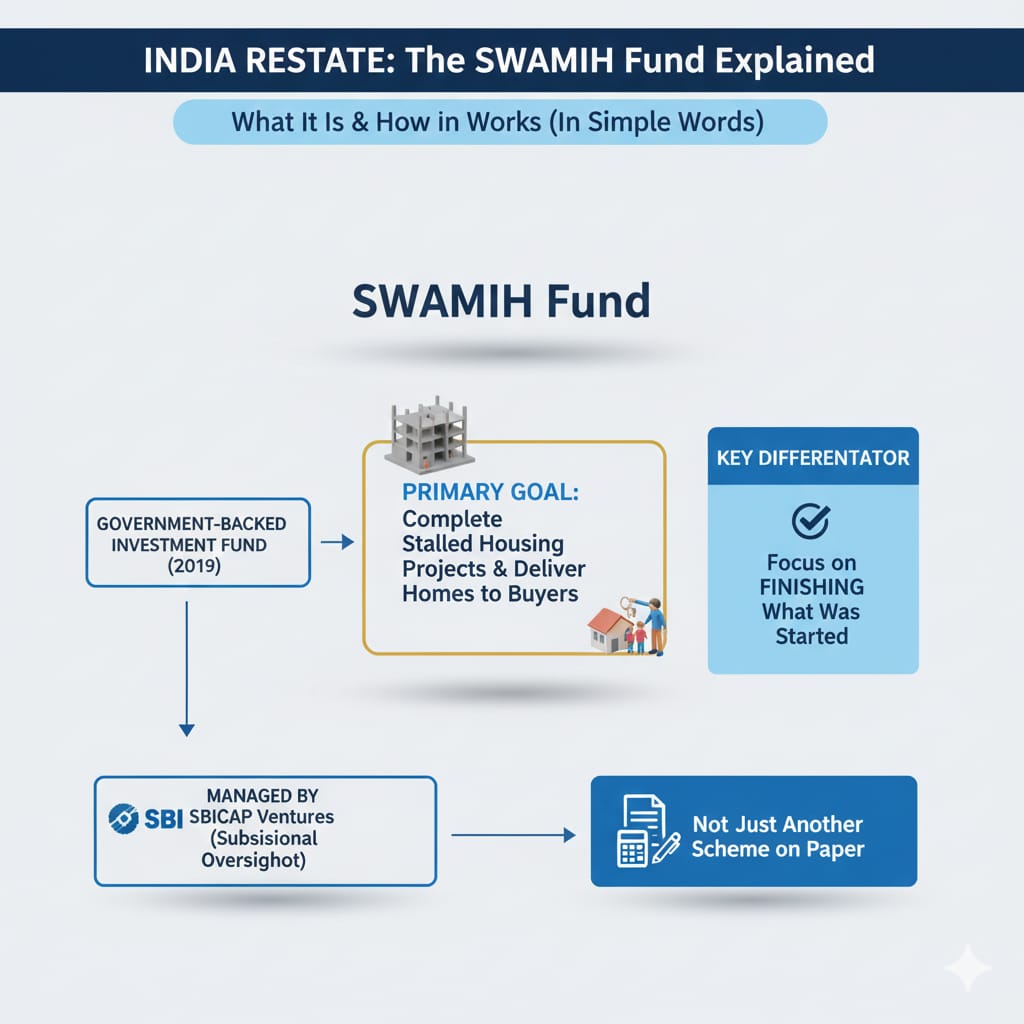
Launched in 2019, the SWAMIH Fund (Special Window for Affordable and Mid-Income Housing Fund) is an investment fund that is backed by the Government of India with a very simple but powerful purpose: to finish unfinished housing projects and deliver homes to buyers.
The focus of this program isn’t to announce another scheme “on paper,” but rather to finish what has already been started—and that makes it different from most of the real estate interventions being made by the Indian government.
By being managed by SBICAP Ventures Private Limited (a subsidiary of SBI), the SWAMIH Fund has a great deal of financial discipline and professional management.
Why Were So Many Projects Stuck in the First Place?
- The first step in finding a solution is to identify the problem.
- The Indian real estate sector has been adversely affected by:
- A liquidity crunch due to the NBFC crisis
- Project management issues among some Real Estate developers
- Regulatory changes introduced through RERA
- Reducing sales volumes and increasing construction costs
- Consequently, there have been numerous incomplete projects stranded halfway through completion, leaving many buyers without a home and with:
- Servicing home loans with no property to secure against,
- Ongoing monthly repayments of home loans (EMIs), and
- A complete lack of certainty regarding their future home ownership.
- The experience of many families who were looking forward to becoming homeowners has instead turned into an unplanned economic burden.
- This is where SWAMIH has been able to assist.
How the SWAMIH Fund Actually Works
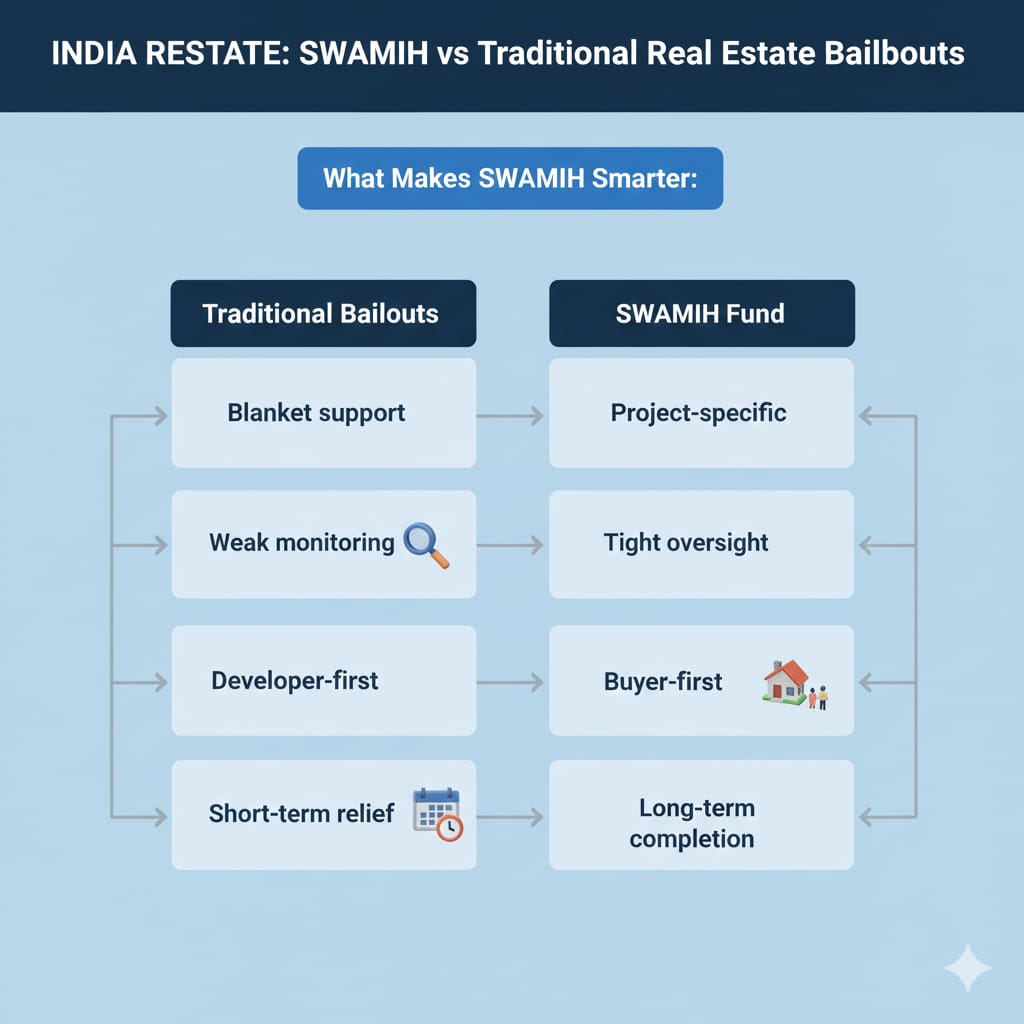
project butThe SWAMIH Fund differs from grants or bailouts by providing funding to projects that are close to completion (referred to as last-mile funding). Funds will only be released after several reviews of the project to ensure that it is indeed a viable project, but has stalled due to financial issues.
The SWAMIH Fund will help developers complete their projects using only the funds earmarked for project completion.
Affordable and middle-income housing will be prioritized for completion with funds from the SWAMIH Fund. The accountability is clear because developers cannot use funds for anything but housing completion.
It’s simple logic, executed in a strong manner.
The Real Impact: Numbers That Matter
Key Statistics: An Impact that Counts
Recent Research Shows:
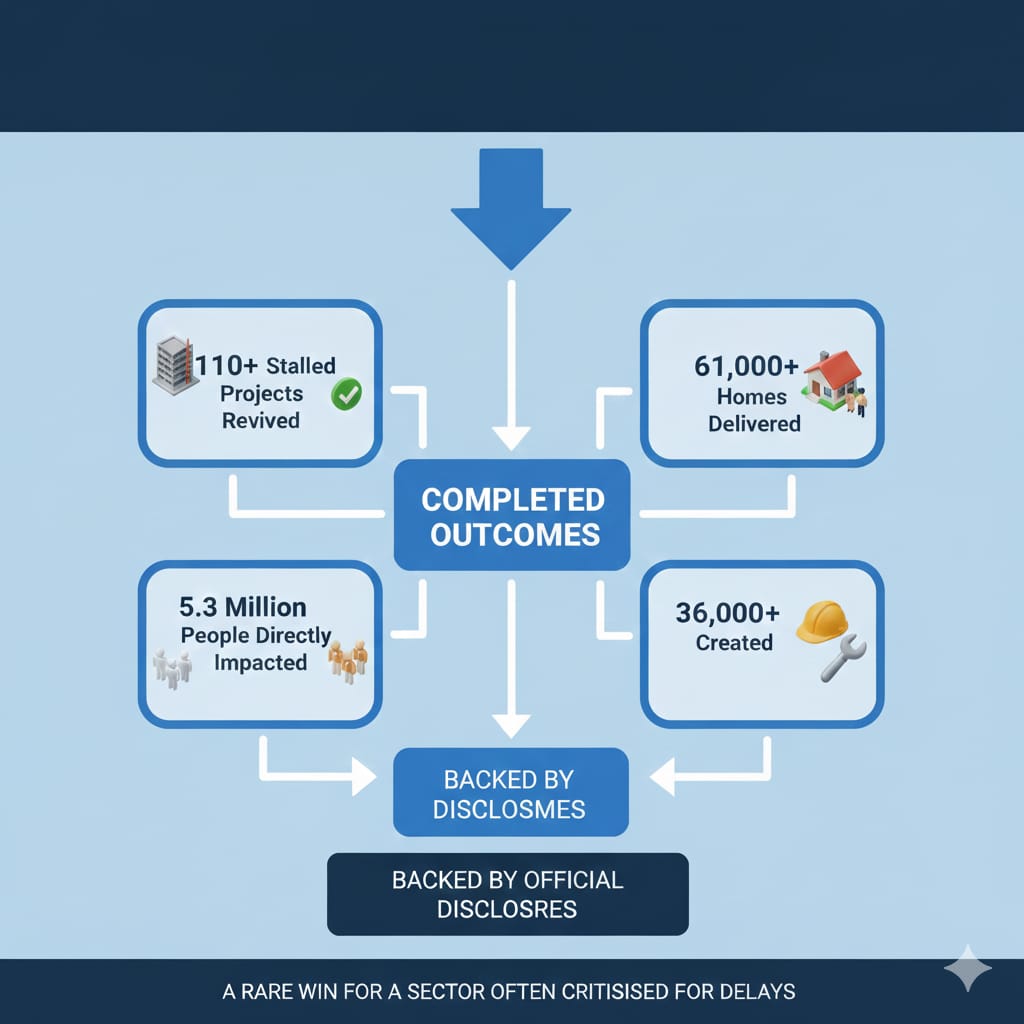
- More Than 100 Revived Previously Stalled Projects
- More Than 61,000 Homes Completed
- Over 5.3 Million People Affected By The Completion Of The Projects
- More Than 36,000 Jobs Created During Project Completion
- These figures represent completed work and are based on official records, rather than estimates or projections. An industry long said to have a problem with delayed times & incomplete deliveries has a major success story!
Why This Decision Changed 5.3 Million Lives
This isn’t a construction issue.
1) Homes Are More Than Money for Many in India:
For many buyers, the psychological relief from owning a home versus renting is substantial. SWAMIH helped bring back faith to many families waiting on their homes for years.
2) BID FOR FINANCIAL FREEDOM:
Many buyers are paying rent plus paying EMIs each month. Completion of projects eliminated this double pressure.
3) ABILITY FOR EMPLOYERS TO GROW & EMPLOY MORE JOBS:
The reopening of stalled construction projects also provided opportunities for skilled and semi-skilled labour to find employment again.
4) REBUILDING MARKET TRUST IN INSTALLED PROJECTS:
The fact that buyers now have confidence that projects will continue allows lenders, insurers, and investors to regain that same confidence.
SWAMIH vs Traditional Real Estate Bailouts
What This Means for Delhi-NCR, Mumbai & Other Hotspots
Several areas, including the National Capital of India (Delhi NCR), the Mumbai Metropolitan Area, Pune, and Bengaluru, had a significant number of unfinished projects.
The Swami program also aided:
Restoration of delayed projects in areas with high need
Relief of excess stock for the developer
Improved buyer confidence
Where property prices were increasing, and delivery of new units was behind, the completion of previously placed units was expected to restore balance.
Is SWAMIH Enough to Fix the Entire Real Estate Sector?
- Short answer: No
- That said, SWAMIH is a good start.
- While it does not address all issues with respect to unfinished homes, it focuses on the greatest pain point for builders in respect to unfinished homes.
- In order for the sector to sustain itself into the future, it is critical that there is:
- Improved project planning
- Improved cash flow management
- Investor responsibility
- Regulatory enforcements continue
- SWAMIH is a targeted intervention that has exceeded its objectives.
What Homebuyers Should Learn From This
If you want to purchase real estate, below are the major points you should take into consideration:
Look for well-funded developments
Look for evidence of construction progress—don’t rely solely on brochures
Understand the concept of last-mile funding
Look for developments that are compatible with government funding.
SWAMIH (Senior Women And Mentoring in Housing) makes a case for why the structure is more important than the glamour associated with a property.
Things That Developers Will Learn
Developers who used SWAMIH have learned some hard lessons regarding their business practices:
They need to be open and transparent; there is no place for withholding information.
If anything, the funds will be used elsewhere; as a result, those developers must bear the consequences.
Continuing to deliver is more important than any kind of marketing.
Trusted Sources Used
- This article references information from the Ministry of Housing and Urban Affairs (India), SBICAP Ventures’ disclosures, and prominent national business news sources to authenticate the content as accurate and credible. All statistics mentioned are publicly available data and have been established as valid and in conformance with certain reporting standards.
Final Thoughts: A Quiet Reform That Actually Worked
The SWAMIH Fund was not promoted with fancy headlines or viral hashtags. Instead, it worked in a less obvious way but delivered results through diligence, consistency, and precision.
Where others have created unfinished projects, the SWAMIH Fund turned those projects into homes for 5.3 million people. For many, the SWAMIH Fund’s impact on their lives was more than just a policy; it changed how they viewed the world. For many, having a home means having everything needed to be successful in life.
Frequently Asked Questions (FAQs)

Harsh Katyan is a real estate content writer and researcher at Insta India Property. He specialises in covering Gurgaon and the Indian real estate market trends, property investment opportunities, and housing news.
He regularly publishes detailed property guides, market analyses, and investment insights to help buyers and investors make informed decisions.



Join The Discussion