
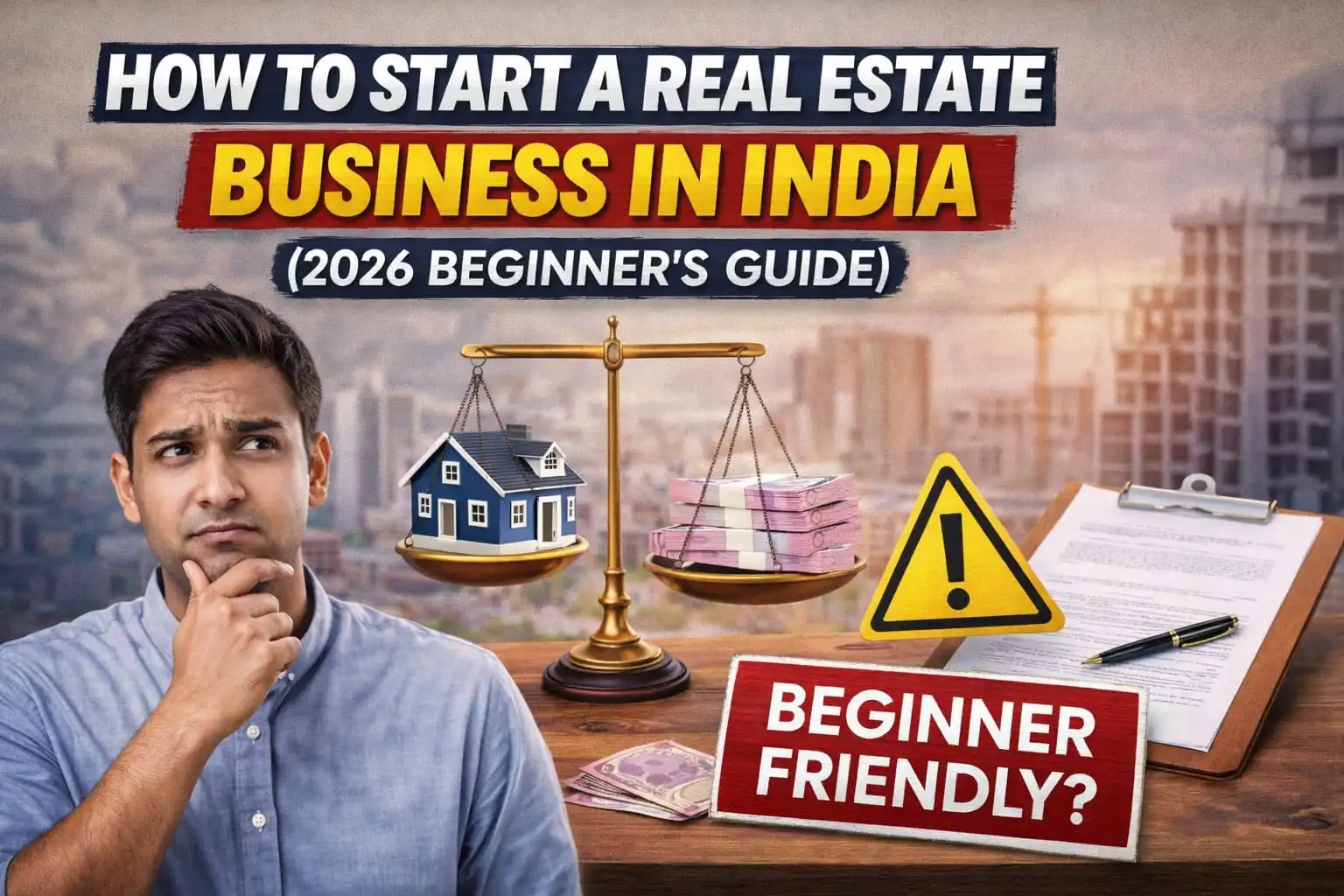
The idea of opening a real estate business in India seems exciting. Big transactions. Big commissions. Big life. But let’s face the truth.
Every successful real estate businessman has paperwork, compliance, networking, and many chai sessions behind him.
If you are planning to venture into the real estate industry in 2026, you will need facts, not fiction. This guide will walk you through the actual process, which is legal, feasible, and profitable, according to the current Indian laws and authentic sources.
We will begin from scratch.
Why Real Estate in India Still Makes Sense in 2026?
India’s real estate sector remains one of the country’s largest industries. According to IBEF (India Brand Equity Foundation), the real estate sector is expected to reach $1 trillion by 2030 and contribute nearly 13% to India’s GDP by 2025.
Urbanisation continues to grow. Demand for housing, commercial spaces, warehousing, and co-working facilities keeps expanding.
Add infrastructure projects, metro expansion, and smart city initiatives — and you have momentum.
Real estate isn’t a “get rich quick” space. But it remains a long-term wealth-building industry.
Step 1: Understand the Real Estate Business Model
Before You Print Visiting Cards: How Money Really Flows in Real Estate
Before you start distributing your visiting cards, you need to know the cash flow in real estate. A newcomer in India usually starts with these sectors:
- Real estate brokerage (on a commission basis)
- Developer Channel Partner
- Property consulting
Renting and leasing services
Most new business entrants start with either brokerage or property consulting. The simple calculation is this: you make a sale, and you make a commission. In residential properties, the commission generally is in the range of 1% to 2% on both sides, depending upon the city and the deal.
Advantages: Inventory does not have to be purchased or stored.
Flexible timing
Drawbacks: – Network is the key. It requires patience and follow-through. In short, printing visiting cards is not sufficient; you should know the flow of money, establish relations, and make intelligent sales. That is how one actually makes money in real estate.
Step 2: Register Your Business Properly
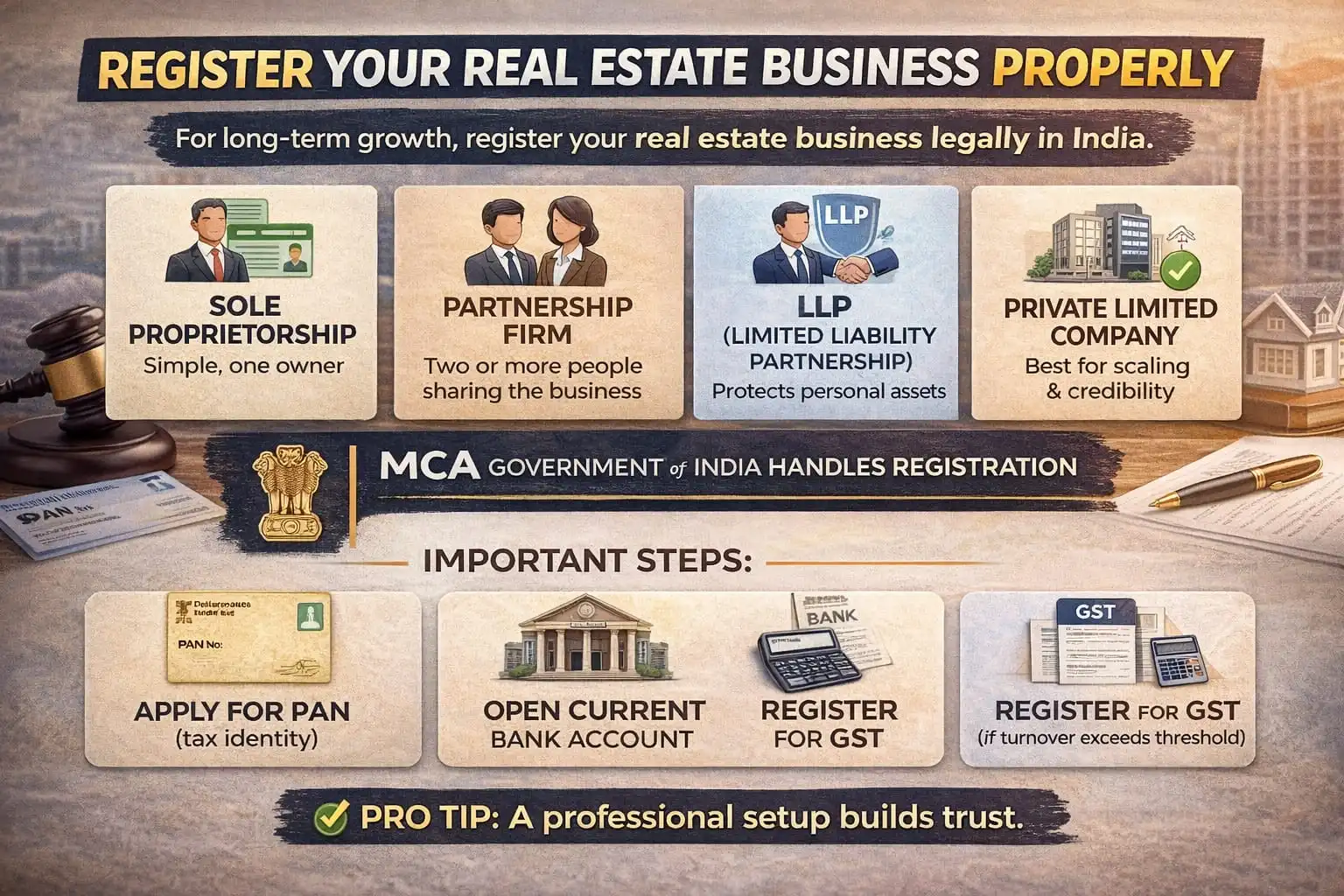
- If you want your real estate business to grow over the long term, register it legally right from the beginning.
- You may select one of the following options:
- Sole Proprietorship – Simple, one owner
- Partnership Firm – The business shared by two or more people
- LLP – Limited Liability Partnership: personal assets are protected.
- Private Limited Company: Best for Scaling and Credibility
- All matters related to the registration of companies in India are dealt with by the MCA.
- If you are planning to work in multiple states or grow fast, an LLP or Private Limited is the smarter choice, as it provides credibility and trust.
- Other major steps involve:
- Apply for a PAN No. – a tax identity
- Open a current bank account
- Register for GST if your turnover crosses the legal threshold.
- Pro Tip: A professional setup builds trust with clients and developers.
Step 3: Understand RERA Compliance
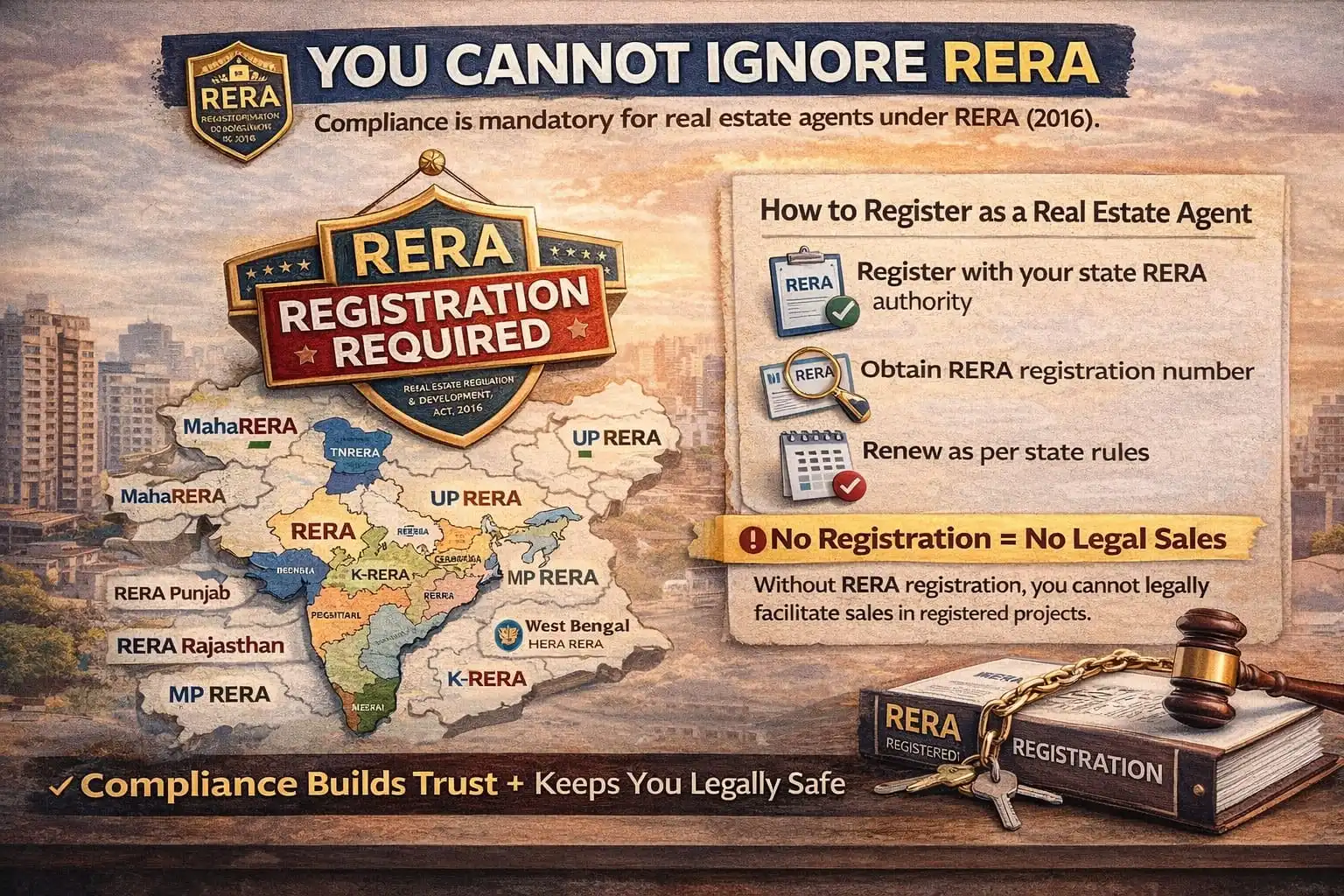
You cannot ignore RERA.
The Real Estate (Regulation & Development) Act, 2016, protects homebuyers and regulates developers and agents. Each state has a separate RERA authority. If you want to be a real estate agent, then you need to:
- Register with your State RERA authority
- Get RERA Registration Number
- Renew as per state rules
- Without RERA approval, one cannot legally facilitate sales in registered projects.
- Details of the above are available on the respective state RERA’s website.
- Repeat this process to establish trust and stay compliant.
Step 4: Choose Your Niche
- Don’t try to sell everything.
- Pick one segment:
- Residential resale
- New project sales
- Luxury housing
- Affordable housing
- Commercial leasing
- Land deals
- In 2026, specialisation matters more than generalisation.
- Clients trust experts, not “jack of all trades” agents.
Step 5: Understand Start-Up Costs
Many beginners often ask:
“Can I start a real estate business without any money?”
Well, starting with very low capital is possible, but starting with zero investment is not realistic.
Here’s what most beginners usually spend on:
- RERA registration fees
- Business registration
- A basic website
- Marketing material (flyers, social media posts, etc.)
- Travel expenses
- Optional office setup (you can skip this in the beginning)
- The good news? You can start working right from home.
- These days, having a strong digital presence matters way more than having a fancy office. Focus on building your online credibility first, and the rest will follow.
Step 6: Build Your Network (This Is Everything)
- Real estate runs on relationships.
- Start building connections with:
- Developers
- Lawyers
- Bank loan officers
- Existing brokers
- Local investors
Networking events, property expos, and local business meetups help.
Referrals generate more deals than cold calls.
Remember: reputation spreads faster than advertisements.
Step 7: Create a Professional Online Presence
In 2026, if you are not online, you don’t exist.
You need:
1. Create a simple website
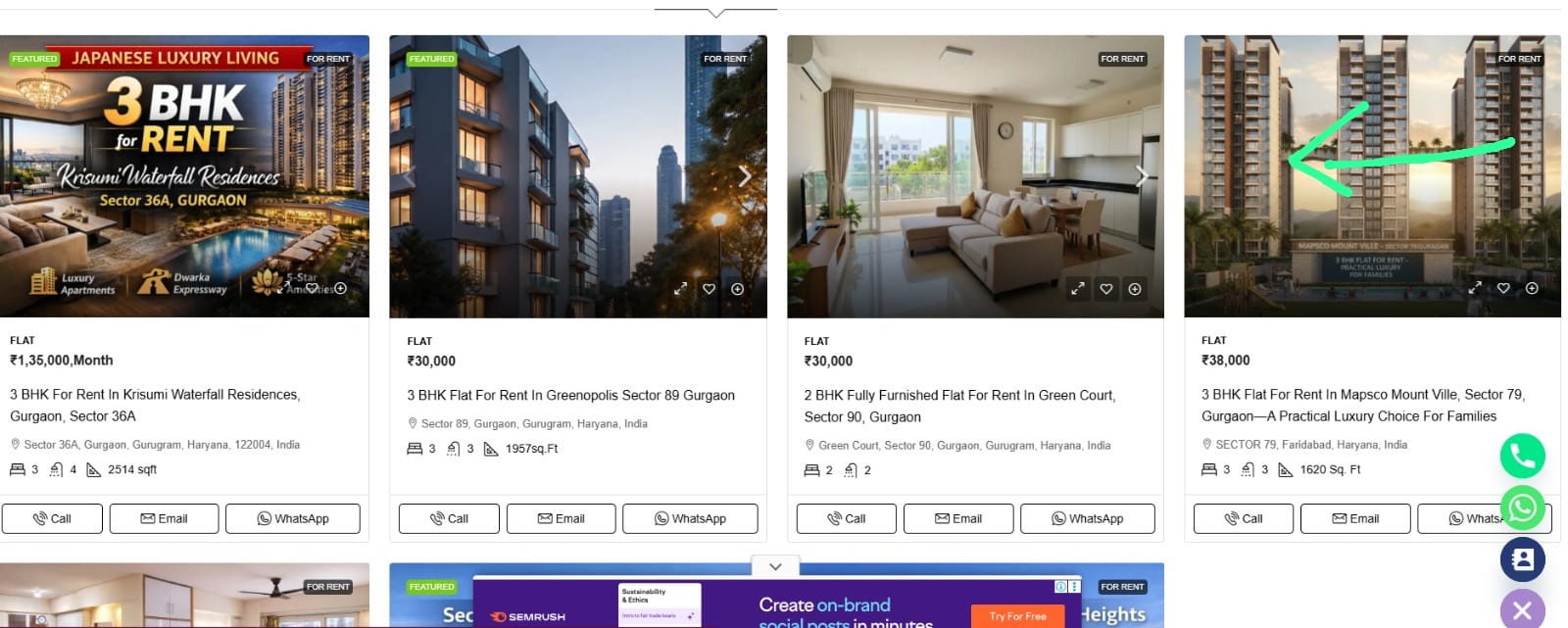
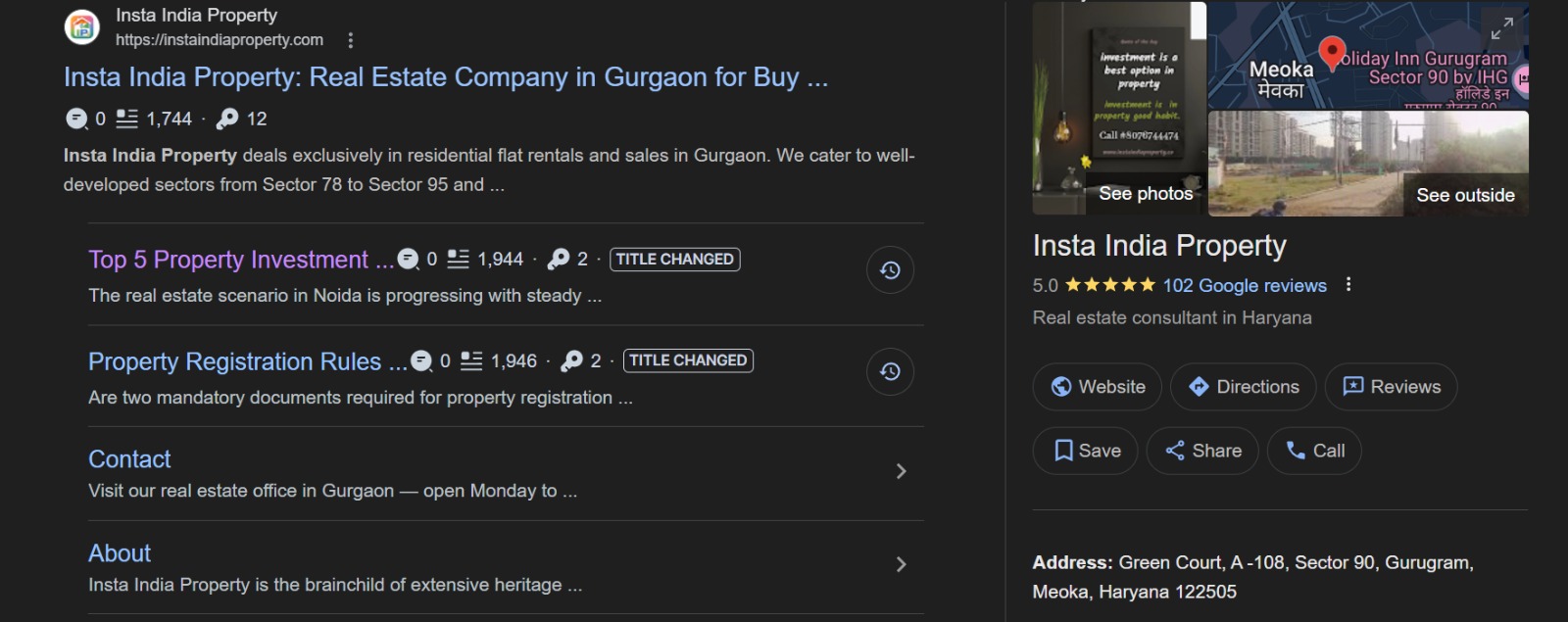
2. Google Business Profile
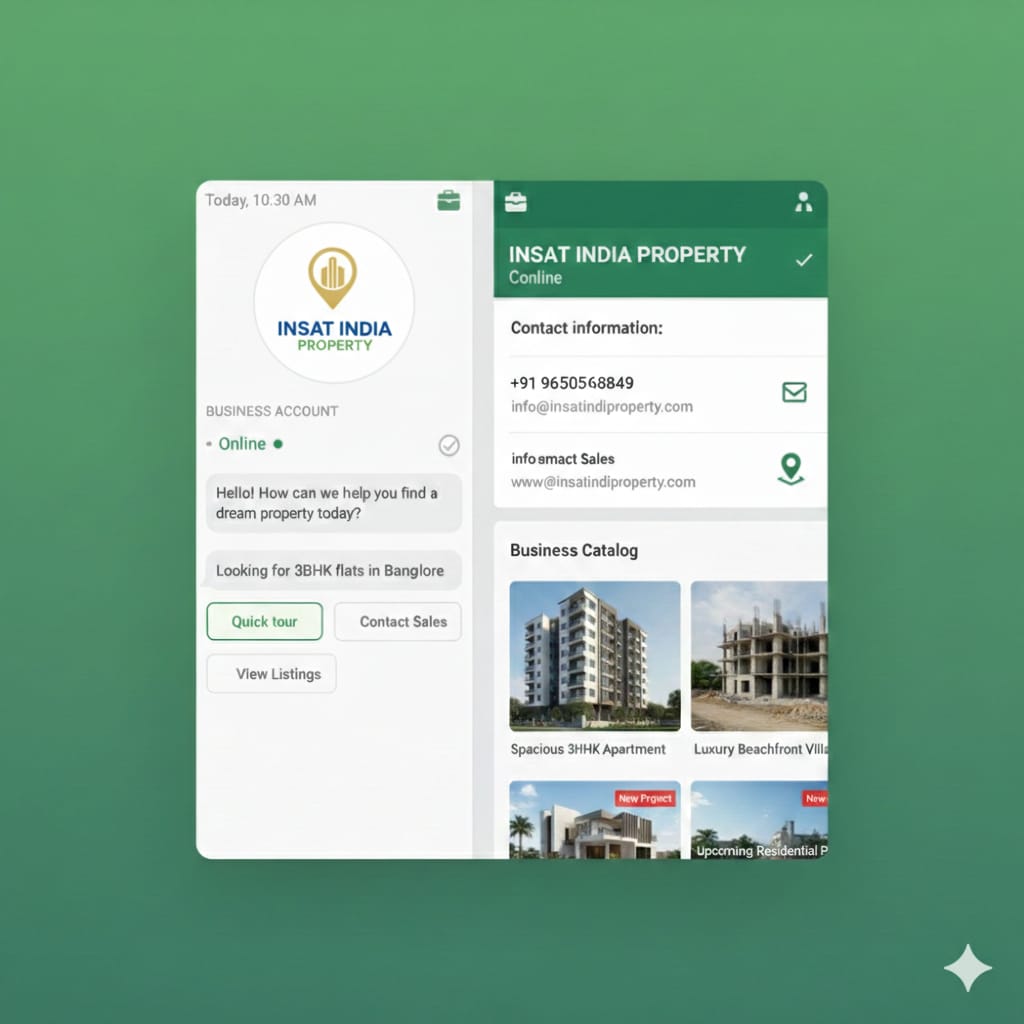
3. Active WhatsApp Business account
4. Social media presence

Post:
Property walkthroughs
Market updates
Loan awareness posts
RERA information
According to Google’s consumer insights, buyers research online before contacting agents. Your digital footprint builds trust.

Step 8: Learn Local Market Data
- Serious buyers ask questions like:
- What is the price per sq. ft.?
- What is the rental yield?
- What are the upcoming infrastructure projects?
- Use credible sources.
- State RERA portals
- IBEF Reports
- According to Knight Frank India reports
- JLL India reports
- Government urban development updates
- Data-Backed Answers Close Deals Faster
Step 9: Understand Legal Documentation
- Real estate paperwork can scare beginners.
- You must understand:
- Sale agreement
- Allotment letter
- Title deed
- Encumbrance certificate
- Stamp duty rules
- Registration process
- Consult property lawyers regularly. Never guess legal facts.
- A single mistake can damage a reputation.

Step 10: Develop Sales Skills (Ethical Sales)
If you try to push properties just to close a deal, you might earn once, but you won’t build a real business.
Aggressive selling may work in the short term. But in real estate, trust is everything. And trust takes time.
Instead, focus on what actually matters: Understand what your client truly needs (budget, location, purpose, plans)
Compare properties honestly—don’t hide the negatives. Be clear about pricing, charges, and commissions. Explain documentation properly so there are no surprises later
Today’s buyers are smarter. Because of RERA, they can verify project registration and details online before making a decision. So exaggeration doesn’t work anymore. In this market, honesty is not just “good behaviour”. It’s a real competitive advantage.
If clients feel safe with you, they won’t just buy once.
They’ll refer you to others. And that’s how long-term growth actually happens.
Step 11: Generate Leads Consistently
- Leads keep your business alive.
- Digital ads
- Referral incentives
- Content marketing
- WhatsApp broadcast lists
- NRI targeting (if experienced)
- But remember:
- Quality beats quantity.
- One serious buyer is worth more than 100 random enquiries.
Is the real estate business profitable in India?
Yes – but not automatically.
As per industry reports published by Knight Frank and JLL India, demand in the residential segment has continued to move forward with a steady pace in the post-pandemic major cities. Commercial leasing activities remain robust in metro cities.
However:
Success depends upon the location, network strength, and consistency.
The time taken by new entrants to develop steady deal flow ranges between 6 to 12 months.
Patience matters.
Common Mistakes Beginners Make
- Let’s keep it real.
- Copying other agents blindly
- Ignoring RERA compliance
- Overpromising possession timelines
- Spending too much on office setup
- Chasing every client without qualification
- Avoid these mistakes and you save years of struggle.
How to Scale Your Real Estate Business
- After stabilising:
- Hire junior agents
- Partner with developers
- Expand to nearby micro-markets
- Offer property management services
- Invest in CRM software
- Scale with systems, not chaos.
Final Thoughts: Is 2026 a Good Time to Start?
India is still growing
Cities are expanding. New highways, metro lines, expressways, and commercial hubs keep changing how people live and invest.
At the same time, housing demand hasn’t disappeared. Families still need homes. Professionals still relocate. Investors still look for better returns. And government policies continue to push affordable housing and transparency in the sector.
Indeed, the potential is there.
However, the path to achievement hinges on how you lay the groundwork.
If you:
Properly register your business
Adhere strictly to RERA regulations
Cultivate robust local connections
Prioritise trust over immediate profits
Leverage digital marketing for visibility
You can establish a lasting real estate venture in India.
It’s not an instant process.
Not by luck.
Not by shortcuts.
But step by step. With credibility. With patience. With consistency.
Real estate rewards those who stay in the game and protect their reputation. If you play it smart and stay honest, this industry can build long-term income — and long-term respect.
Trusted Sources Referenced
- India Brand Equity Foundation (IBEF) – Real Estate Industry Overview
- Ministry of Corporate Affairs (MCA)
- Real Estate (Regulation and Development) Act, 2016
- Knight Frank India Reports
- JLL India Market Reports
How Insta India Property Can Help You
If you are just starting out and feeling confused, you don’t need to do it on your own.
At Insta India Property, we help you as a beginner step by step. Whether you require guidance on understanding the RERA process, identifying the correct business model, creating business leads of properties, or developing your presence on the internet, we are here to help you as a beginner, step by step.
Practical knowledge. Real market insights. Unbiased guidance. No unrealistic promises. No fake shortcuts.
Our objective is simple:
Helps you start smart, stay smart, and grow smart in Indian real estate.
If you’re serious about establishing your long-term business in real estate, Insta India Property can be your trusted partner.

Harsh Katyan is a real estate content writer and researcher at Insta India Property. He specialises in covering Gurgaon and the Indian real estate market trends, property investment opportunities, and housing news.
He regularly publishes detailed property guides, market analyses, and investment insights to help buyers and investors make informed decisions.



Join The Discussion